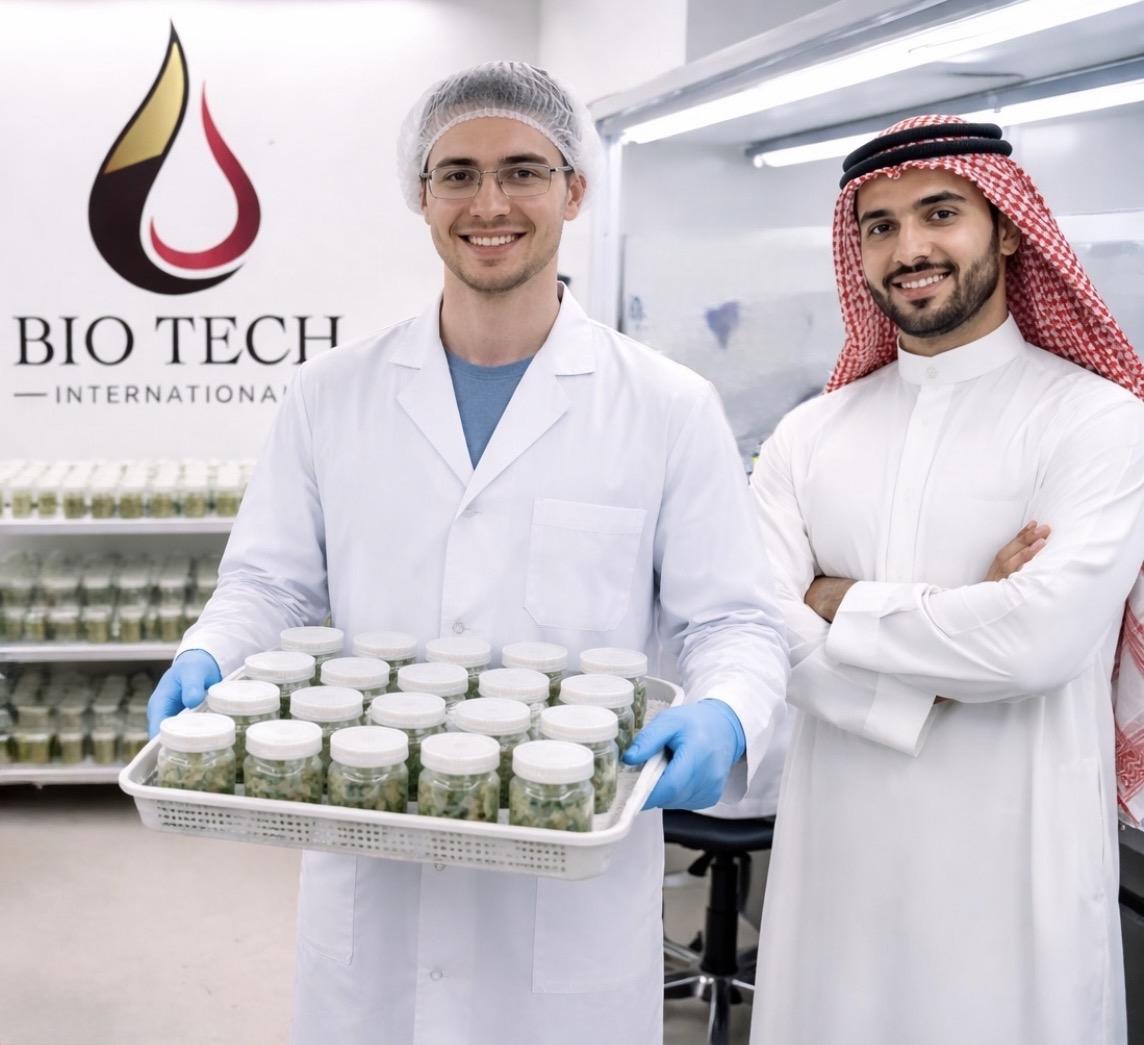
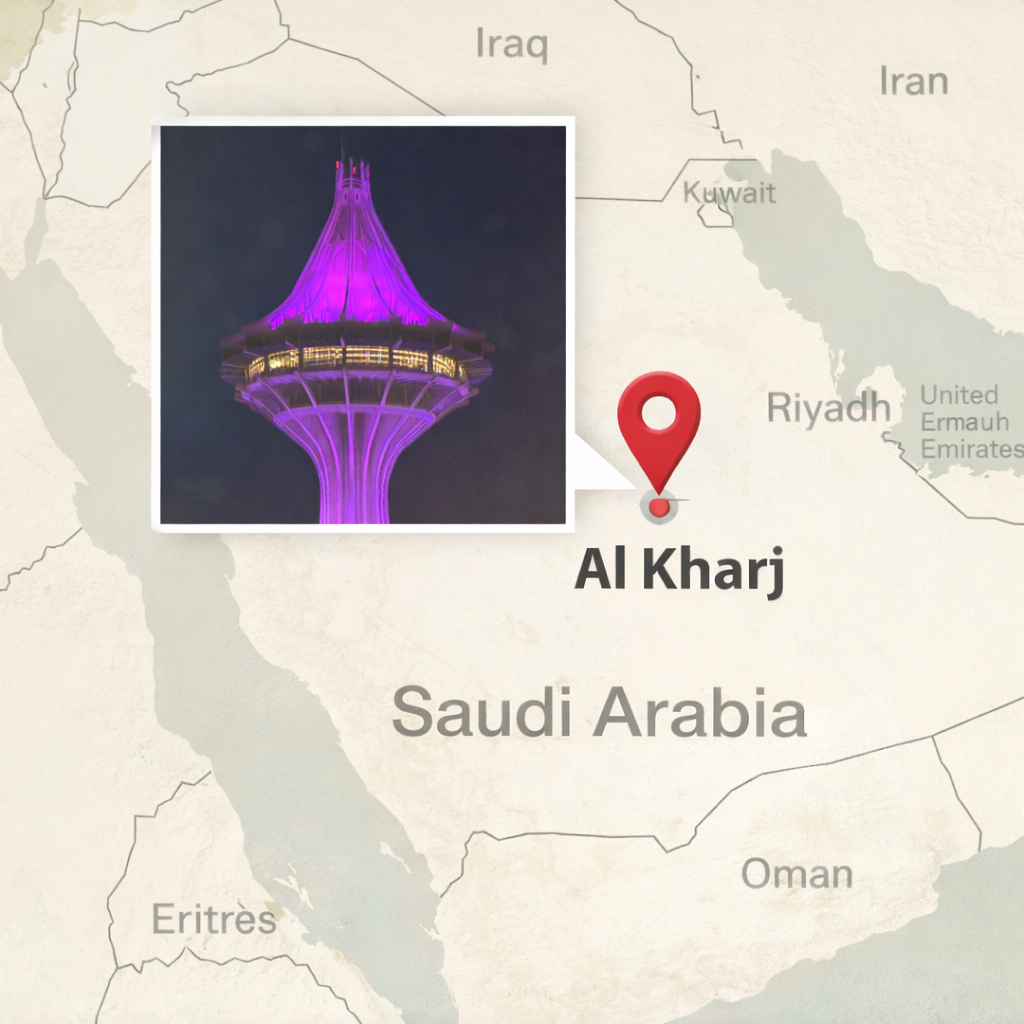
Located in Al Kharj, Saudi Arabia, the the Bio Tech Tissue Culture Laboratory is the beating heart of our operation. Designed to supply millions of Moringa Trees to our global operation, each tree is an exact clone of our specially selected Moringa cultivar.
Location on Google Maps: AI Kharj, Saudi Arabia.
يقع مختبر زراعة الأنسجة التابع لشركة BioTech في مدينة الخرج بالمملكة العربية السعودية، وهو بمثابة القلب النابض لعملياتنا. صُمم المختبر لتزويد عملياتنا العالمية بملايين أشجار المورينجا، حيث تُعد كل شجرة نسخة طبق الأصل من صنف المورينجا الذي اخترناه بعناية.
الموقع على خرائط جوجل: AI Kharj, Saudi Arabia.
Moringa Oleifera
Bio Techs High Density Moringa Tree
Over the past 10 years, Bio Tech International, in collaboration with numerous research institutions, has developed a groundbreaking new variety of the Moringa tree. Designed for high-density harvesting, the leaves of Bio Tech’s Moringa tree are 5–8 times larger than those of the natural Moringa tree. The tree is engineered to grow to a height of 3 to 6 meters with a single, sturdy trunk, unlike the natural Moringa tree, which branches out in multiple directions.
The density of the Bio Tech Moringa tree is 4 times greater than that of its natural counterpart. For example, a typical natural Moringa tree yields approximately 2 kilograms of leaves per harvest, whereas Bio Tech’s variety can produce up to 8 kilograms. This new variety of trees can be harvested between 6 to 8 times a year, making it the most efficient Moringa tree for harvesting on Earth.
Moringa Oleifera
Bio Techs Moringa Tree
To support global planting efforts and ensure a continuous supply of trees, Bio Tech has also developed a secondary Moringa tree specifically for producing large quantities of seeds. These seeds will not only facilitate the worldwide cultivation of Bio Tech’s trees but also serve as a valuable resource for extracting Moringa oil. This oil is regarded as one of the best natural sources for skincare, cholesterol management, blood sugar control, detoxification, and anti-inflammatory purposes, among other benefits.
In addition to its increased yield, the enhanced density allows this tree to absorb 4 times more CO₂ than a natural Moringa tree. Designed to thrive in hotter climates with minimal water requirements, this tree offers a sustainable solution to address the challenges of global warming. According to Bio Tech International and the scientific community, this innovation represents a major breakthrough in combating the climate crisis caused by CO₂ emissions.
At Bio Tech, we believe these advancements in Moringa cultivation are game-changers in the fight against global warming and a significant step toward a more sustainable and healthier future.
Making a Difference
Global Impact
The greatest carbon dioxide emission absorber is the moringa. The Moringa tree assimilates carbon dioxide at a rate that is twenty times (20x) greater than that of any other tree. The greatest carbon dioxide emission absorber is the moringa. According to a study on Moringa and global warming, 1 person emits 320 kg of CO2 per year, which takes 23 Japanese cedar trees 50 years to absorb, 2 moringa trees absorb this amount in 2 years, and 1 family car emits 2300 kg of CO2 per year, which takes 160 Japanese cedar trees 50 years to absorb, 10 moringa trees absorb this amount in 2 years, etc. (need reference, Muriel,2010)
Bio Tech international will employ dual fuel machines when we are harvesting and cultivating. Then, we include a fuel consumption model that uses 90% methane gas and 10% diesel. The methane gas that our industrial processes generate as a waste gas. Overall, we save a lot of money on fuel, and our carbon footprint is greatly diminished. Additionally, we would use generators to produce our own electricity using the same fuel concept.
We use a zero effluent technique with zero by-products or waste components while processing the different Moringa-based products. Bio Tech is hence highly ecologically friendly.
50 Years
100%
Japanese cedar trees
23 Japanese cedar trees 50 years to absorb 320kg of C02
2 Years
20%
Moringa trees
2 moringa trees 2 years to absorb 320kg of C02
At Bio Tech International, our aim is to improve the economics of the world’s food shortage, Bio Tech has developed a unique technology to produce both high protein human and animal food enriched products.